Speakers

Farhad Shahnia
Professor, Murdoch University, Australia.
Research field: Power system, renewable sources, objective function, renewable energy, renewable energy sources, battery capacity, convolutional neural network, copper loss, electric vehicles, energy storage systems, investment costs, long short-term memory.
Professor Farhad Shahnia (Senior Member, IEEE) received his PhD in Electrical Engineering from Queensland University of Technology (QUT), Brisbane, in 2012. He is currently an A/Professor at Murdoch University. Farhad’s research falls under Distribution networks, Microgrid and Smart grid concepts. He has authored one book and 11 book chapters and 100+ peer-reviewed scholarly articles in international conferences and journals, as well as being an editor of 6 books. Farhad has won 5 Best Paper Awards in various conferences and has also received the IET Premium Award for the Best Paper published in the IET Generation, Transmission & Distribution journal in 2015. One of his articles was listed under the top-25 most cited articles in the Electric Power System Research Journal in 2015 while one of his 2015 journal articles has been listed under the top-5 most read articles of the Australian Journal of Electrical and Electronics Engineering. He was the recipient of the Postgraduate Research Supervisor Award from Curtin University in 2015 and the Australia-China Young Scientist Exchange Award from the Australian Academy of Technology and Engineering in 2016. Farhad is currently a Subject Editor, Deputy Subject Editor, and Associate Editor of several journals including IEEE Access, IET Generation, Transmission & Distribution, IET Renewable Power Generation, IET Smart Grid, IET Energy Conversion and Economics, and International Transaction on Electrical Energy Systems and has served 35+ conferences in various roles such as General, Technical, Program, Publication, Publicity, Award, Sponsorship, and Special Session Chairs. Farhad has led the IEEE Western Australia Section as the 2020-2021 Chair, and was the 2019 Founding Chair of the IEEE Western Australia Industrial Electronics Society (IES) Chapter. He is currently the 2021-2022 Secretary of the IES’s Technical Committees on Smart Grids.

Nadeem Javaid
Professor, COMSATS University Islamabad, Pakistan.
Research field: Energy optimization in smart grids, wireless sensor networks, big data analytics, and blockchain.
Nadeem Javaid (Senior Member, IEEE) received the master’s degree in electronics from Quaid-i-Azam University, Islamabad, Pakistan, in 1999, and the Ph.D. degree from the University of Paris-Est, France, in 2010. He was a Visiting Professor with the University of Technology Sydney, Australia. He is currently Tenured Professor and Founding Director of the Communications Over Sensors (ComSens) Research Laboratory, Department of Computer Science, COMSATS University Islamabad, Islamabad Campus. He has supervised 203 master’s and 32 Ph.D. theses. He has authored over 950 articles in technical journals and international conferences. He was a recipient of the Best University Teacher Award from the Higher Education Commission of Pakistan, in 2016, and the Research Productivity Award from the Pakistan Council for Science and Technology, in 2017. He is also an Associate Editor of IEEE Access. He is also an Editor of the Sustainable Cities and Society Journals.

Jiashen Teh
Associate Professor, Universiti Sains Malaysia, Malaysia.
Research field: Electric vehicles, dynamic line rating, state of charge, monte carlo simulation, renewable energy, wind power, battery capacity, battery degradation, battery performance, battery state of charge, charge behavior, control method.
Jiashen Teh (Senior Member, IEEE) received the B.Eng. degree (Hons.) in electrical and electronic engineering from Universiti Tenaga Nasional, Kajang, Malaysia, in 2010 and the Ph.D. degree in electrical and electronic engineering from The University of Manchester, Manchester, U.K. in 2016. Since 2023, he has been an Associate Professor with Universiti Sains Malaysia, George Town, Malaysia. He is currently a Chartered Engineer conferred by the Engineering Council, U.K. and The Institution of Engineering and Technology, as well as a registered Professional Engineer with the Board of Engineers Malaysia. His research interests include probabilistic modeling of power systems, grid integration of renewable energy sources, and reliability modeling of smart grid networks. For three consecutive years in 2019, 2020 and 2021, he was among the top 2% of the world's most cited researchers according to field ranked by Stanford University. In 2021, he was the recipient of the IEEE PES Malaysia Outstanding Engineer Award.
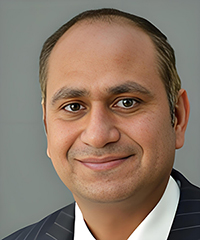
Mohan Lal Kolhe
Professor, University of Agder, Norway.
Research field: Sustainable Electrical Energy Systems, Smart Grid and Grid Integration of Renewable Energy Systems, Electric Vehicles, Hydrogen Energy Technologies, Solar Photovoltaic and Wind Energy Systems Engineering, Electro-Mechanical-Chemical Energy Conversion and Management, Power System Dynamics, Electrical Machines, Energy Conversion and Management, Techno-Economics of Energy Systems.
Prof. Dr. Mohan Lal Kolhe is a full professor in smart grid and renewable energy at the Faculty of Engineering and Science of the University of Agder (Norway). He is a leading renewable energy technologist with three decades of academic experience at the international level and previously held academic positions at the world's prestigious universities, e.g., University College London (UK / Australia), University of Dundee (UK); University of Jyvaskyla (Finland); Hydrogen Research Institute, QC (Canada); etc. In addition, he was a member of the Government of South Australia's first Renewable Energy Board (2009-2011) and worked on developing renewable energy policies. Professor Kolhe is an expert evaluator of many prestigious international research councils (e.g., European Commission: Erasmus+ Higher Education – International Capacity Building, Royal Society London (UK), Engineering and Physical Sciences Research Council (EPSRC UK), Cyprus Research Foundation, etc.). In addition, many international organizations have invited him to deliver keynote addresses, expert lectures, workshops, etc. He has also been a member of many academic promotional committees. Professor Kolhe has been successful in obtaining competitive research funding from prestigious research bodies (such as the Norwegian Research Council, EU, EPSRC, BBSRC, NRP, etc.) for his work on sustainable energy systems. His work on energy systems and electrical & electronic engineering has been recognised in the top 2% of scientists worldwide consistently from 2020 to 2023, according to Stanford University matrices based on Elsevier data. His top 10 publications have received an average of more than 200 citations each, making him an acknowledged pioneer in his profession on a global scale.
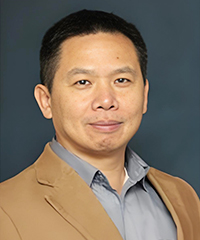
Zhiwei Gao
Reader, University of Northumbria, UK.
Research field: Fault Diagnosis, Long Short-term Memory, Neural Network, Actuator Faults, Sensor Faults, State-space Model, Control Input, Convolutional Neural Network, Event-triggered Mechanism, Fault Estimation, Fault-tolerant Control, Gated Recurrent Unit.
Zhiwei Gao (Fellow, IEEE) received the B.Eng. degree in industrial automation and the M.Eng. and Ph.D. degrees in systems engineering from Tianjin University, Tianjin, China, in 1987, 1993, and 1996, respectively., His research interests include estimation and filtering, diagnosis and control, digital twins, power electronics, wind energy systems, electric vehicles, and offshore energy., Dr. Gao was the Associate Editor of IEEE Transactions on Automatic Control, IEEE Transactions on Control Systems Technology, IEEE Transactions on Industrial Informatics, IEEE Transactions on Systems Man and Cybernetics: Systems, and IEEE Transactions on Industrial Electronics, and the Senior Editor of IEEE Access. He is also the Associate Editor of ISA Transactions (Elsevier) and Journal of Ambient and Humanized Computing (Springer), and the Editorial Member of Renewable Energy (Elsevier). He is the Fellow of AAIA.
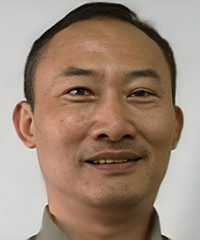
Hong Shen
Professor, Central Queensland University, Australia.
Research field: Algorithms, Parallel computing, Networking, Data mining, Data privacy protection.
Hong Shen is a specially-appointed Professor in Sun Yat-sen University, China, where he was the foundation Director of SYSU's Institute for Advanced Computing. He is also an Adjunct Professor in the University of Adelaide, Australia, where he was a tenured Professor (Chair of Computer Science) for 15 years. He received the BS degree from Beijing University of Science and Technology, MS degree from University of Science and Technology of China, and PhD degree from Abo Akademi University, Finland. Dr Shen was Professor and Chair of the Computer Networks Laboratory in Japan Advanced Institute of Science and Technology (JAIST), and Professor of Computer Science at Griffith University. With main research interests in parallel and distributed computing, privacy preserving computing and high performance networks, he has led numerous research centers and projects in different countries. He has published 400+ papers including over 100 papers in major international journals such as a variety of IEEE and ACM transactions. Dr. Shen received many honors and awards, and served on different roles in professional societies, journal editorial boards and conference committees.
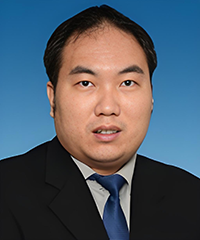
Bernard Saw Lip Huat
Professor, Universiti Tunku Abdul Rahman, Malaysia.
Research field: Battery, Lithium Ion Batteries, Reaction Kinetics, Wave Propagation.
Prof. Ir. Ts. Dr. Bernard Saw is a Professor at the Lee Kong Chian Faculty of Engineering and Science and the Director of the Division of Sustainability and Strategic Management at Universiti Tunku Abdul Rahman (UTAR). In 2015, he earned his Ph.D. from the National University of Singapore (NUS). He is also a registered Professional Engineer, Chartered Engineer, Professional Technologist, and fellow of the Asean Academy of Engineering and Technology (AAET). His research interests include energy storage system, ventilation, computational fluid dynamics, thermal management, and renewable energy. Prof. Saw's pioneering research has earned recognition in both academia and industry, placing him among the top 2% of the world's most highly cited scientists, as published by Stanford University, and he won the Top Research Scientist Malaysia 2023 award. He has published more than 100 peer-reviewed papers in prestigious international journals and authored five books and book chapters. His innovative spirit extends to developing patented products and intellectual property. Additionally, he has received more than 30 awards from international and local competitions and has been recognized as an outstanding reviewer for more than 10 international journals. Prof. Saw also serves as an editorial member and guest editor for several international journals and actively contributes as a consultant and principal investigator for renowned international and national projects.
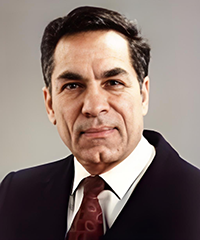
Om Parkash Malik
Professor, University of Calgary, Canada.
Research field: Adaptive and Artificial-Intelligence-Based Controllers for Application in Electric Power Systems, Parameter Estimation of Electric Machines, Failure Modelling of Power Transformers, Power System Protection, Particular.
Professor Om P. Malik has done pioneering work in the development of controllers for application in electric power systems and wind power generation over the past over 50 years. After extensive testing, the adaptive controllers developed by his group are now employed on large generating units. His other interests include digital protection, control of renewable power generation and micro-grids, and AI applications in power system control. He has published over 800 papers including over 410 papers in international Journals and is the coauthor of four books: (1) Electric Distribution Systems, (2) Power System Stability, (3) Power Grids with Renewable Energy, (4) Power System Stability and Control. Professor Malik graduated in 1952 from Delhi Polytechnic. After working for nine years in electric utilities in India, he obtained a Master Degree from Roorkee University in 1962, a Ph.D. from London University and a DIC from the Imperial College, London in 1965. He was teaching and doing research in Canada from 1966 to 1997 and continues to do research as Professor Emeritus at the University of Calgary. Over 100, including 54 Ph.D., students have graduated under his supervision. Professor Malik is a Life Fellow of IEEE, and a Fellow of IET, the Engineering Institute of Canada, Canadian Academy of Engineering, Engineers Canada and World Innovation Foundation. He is a registered Professional Engineer in the Provinces of Alberta and Ontario, Canada, and has received many awards. He was Director, IEEE Region 7 and President, IEEE Canada during 2010-11 and President, Engineering Institute of Canada, 2014-2016.
Latest News
May 07, 2026
Mar 17, 2026
Mar 16, 2026
Announcements
Supported By